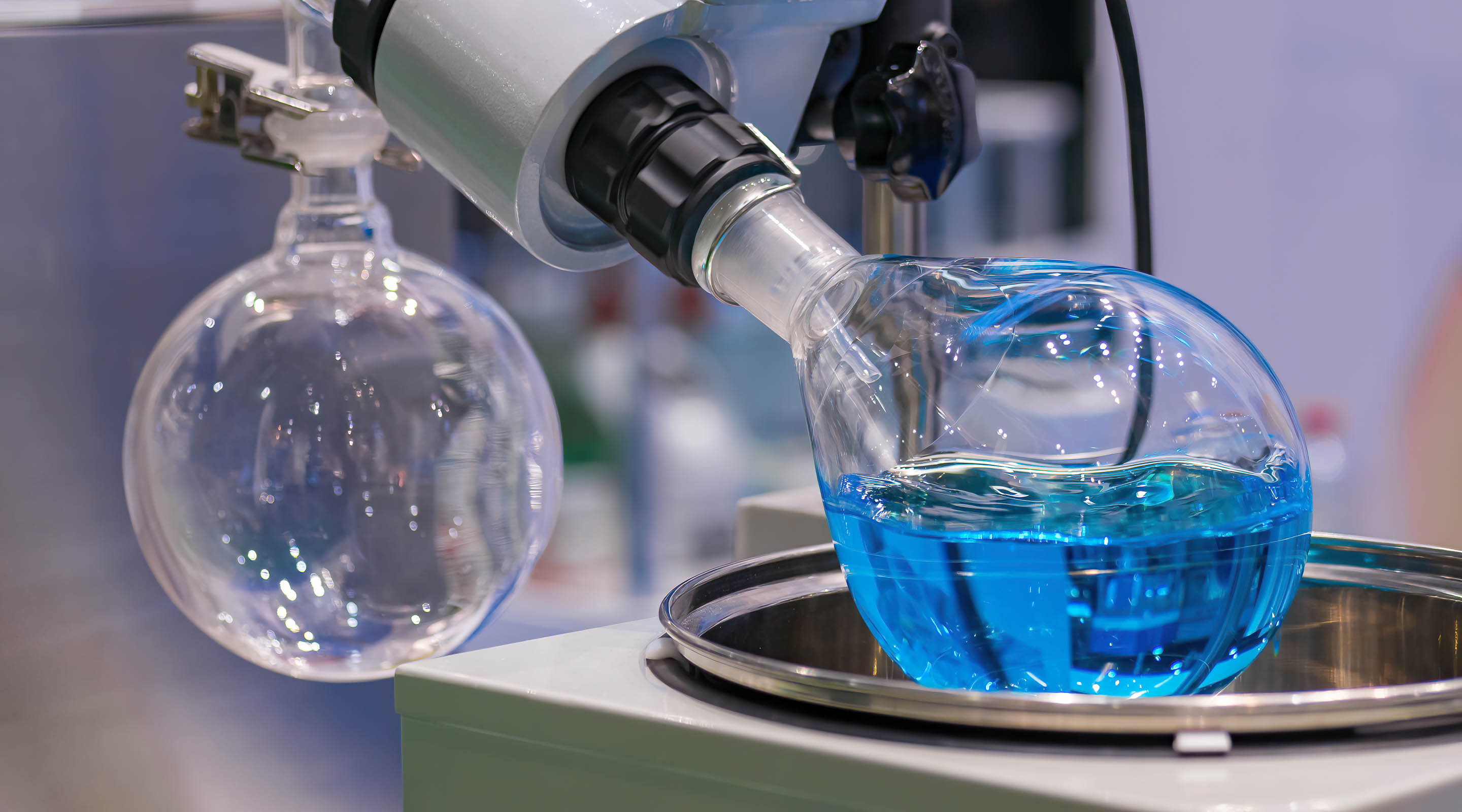

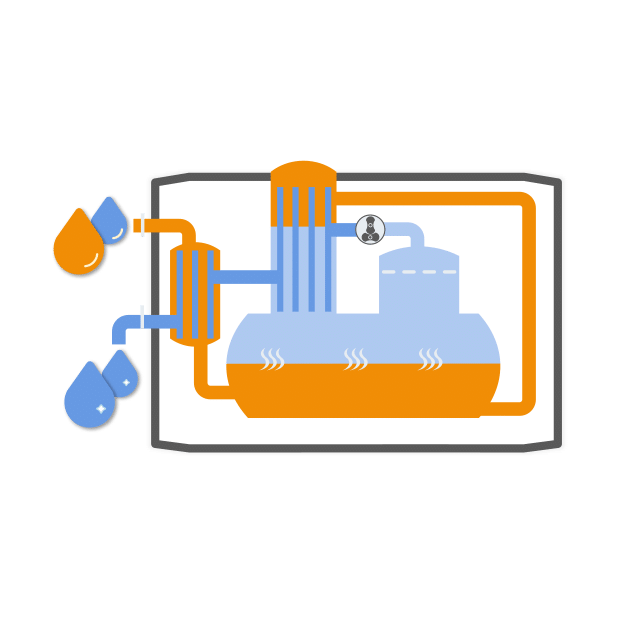
Evaporation is a thermal process used for industrial wastewater treatment. Under vacuum conditions, water is evaporated from the wastewater and subsequently condensed as distillate. This produces a treated water stream, while non-volatile contaminants remain in the concentrate.
Evaporation can provide a resource-conscious and economically viable treatment option for industrial wastewater streams where conventional treatment processes reach their limits. Wastewater containing flammable substances or potentially explosive vapour mixtures is not suitable for evaporation.
Products for this application

When Is Evaporation a Suitable Treatment Option?
Industrial evaporators can be used for wastewater containing highly complexed heavy metals, non-volatile AOX from PVC processes, as well as water-soluble, non-volatile organic compounds from the pharmaceutical and chemical industries.
Evaporation can also support the recovery of valuable raw materials such as gold and platinum from catalytic processes and electroplating wastewater.
The process is also suitable for synthetic, non-breakable emulsions where the relevant constituents are non-volatile with water vapour.
Economics Meets Technology
OKO-tech evaporators are selected based on the total cost of treating each cubic metre of wastewater. The economic assessment includes investment costs, chemicals, antifoaming agents, wear parts such as vapour compressors, concentrate volumes and disposal costs.
Energy consumption, personnel costs and exhaust air treatment are also included in the overall assessment. This comprehensive approach enables predictable treatment costs per cubic metre of industrial wastewater.
The quality of the resulting distillate is assessed according to the specific application. Where the required quality is achieved, the distillate can preferably be reused as process or recirculation water, helping to reduce freshwater consumption and the overall environmental footprint.