Effective Separation of Oil-Water Emulsions
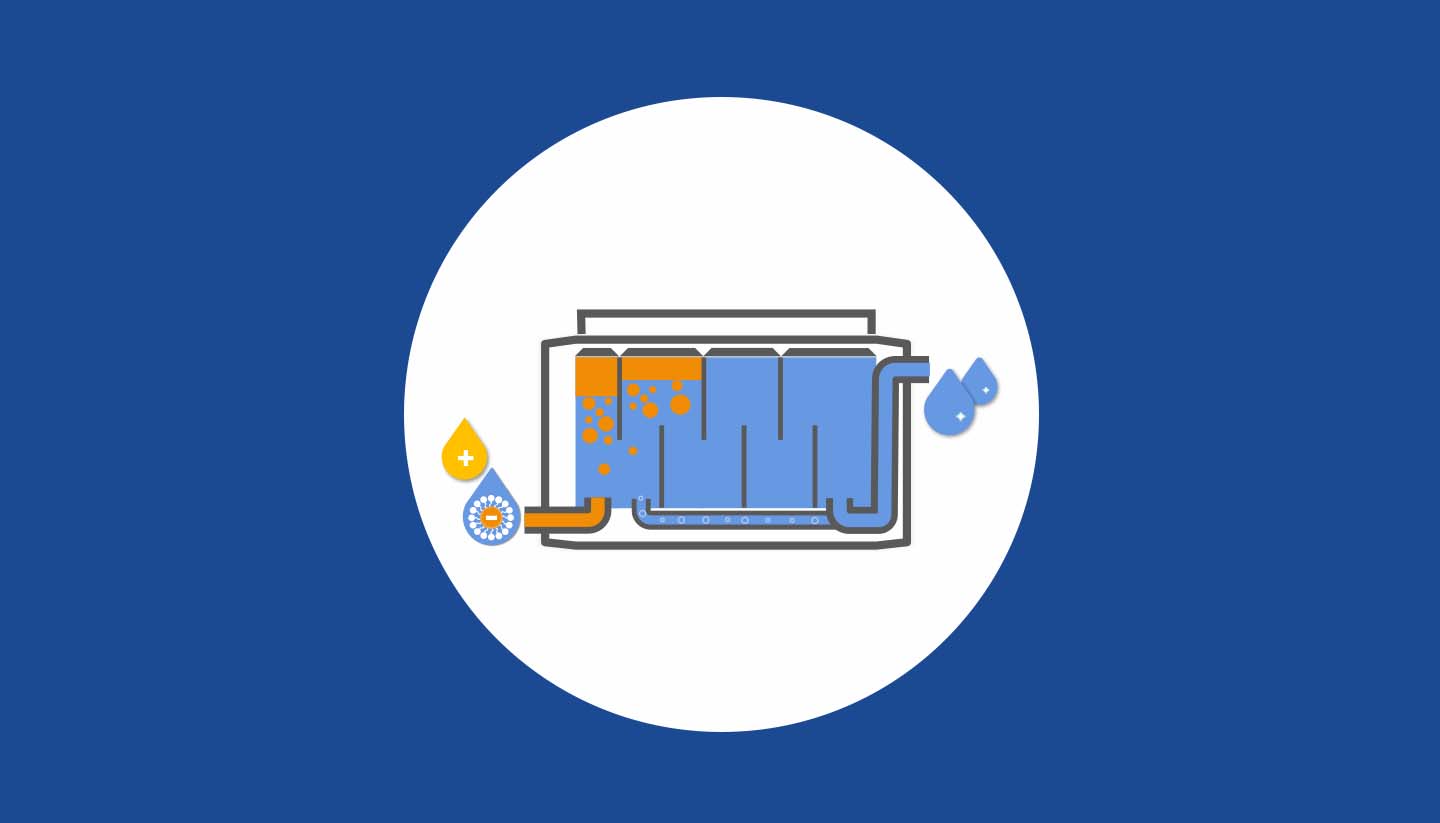
Emulsion breaking is a key treatment step in industrial wastewater treatment. It separates oil-in-water emulsions and supports controlled and stable wastewater treatment. Demulsifying agents, typically cationic polymers, destabilise the emulsions and promote separation of the oil and water phases. This allows the separated phases to be treated further or recovered individually, depending on the application.
Advantages over Conventional Acid Splitting
Unlike acid splitting, organic emulsion breaking does not require acidification of the wastewater and subsequent neutralisation. This eliminates the need for lime milk for neutralisation and avoids the associated formation of neutralisation sludge. As a result, companies can reduce disposal costs and chemical consumption while simplifying process operation. At the same time, the separation process can be controlled precisely to achieve consistent treatment results.
OKO-tech Systems for Emulsion Breaking
OKO-tech systems are designed for effective emulsion breaking in industrial wastewater treatment. Sensors can be used to detect phase interfaces and control the separation process. This reduces the need for manual intervention, supports stable process operation and helps make resource use more efficient.
Reducing the Load on Downstream Treatment Processes
Organic emulsion breaking can also reduce the load on downstream treatment processes such as filtration, flotation or biological treatment. This can lower energy and chemical consumption and, where suitable, enable the recovery of valuable materials such as oil.
The process is particularly relevant in applications such as food production, the chemical industry and metalworking, where wastewater characteristics can vary considerably. OKO-tech designs the treatment concept according to the specific wastewater composition and process requirements.